

Quality Assurance
Quality Inspection and Quality Inspection Standards
IPC standards: The most authoritative international standards in the electronics industry, IPC-A-600 (Acceptability of Printed Boards) and IPC-6012 (Qualification and Performance Specification for Rigid Printed Boards).
National Standard (GB): China's national standard.
Customer drawings/specifications: The highest priority document, any conflicts with standards shall be subject to customer requirements.
Internal quality control documents: internal control standards developed by the factory that are stricter than general standards.
1. Production process self inspection
The inspection conducted immediately by the operator or quality inspector after each critical process is completed, aiming to promptly identify and correct problems, and prevent defects from flowing into the next stage.
| Inspection process | main inspection items | common methods | tools |
|---|---|---|---|
| After the inner circuit | Whether the short circuit, gap, pinhole, and line width/spacing meet the requirements | Automatic optical inspection (AOI) | Compare the design graphics and perform 100% inspection |
| After lamination | Delamination, blistering, white spots, warping of the board | Visual inspection of thickness, tapping and listening to sound (to determine delamination) | Thickness gauge |
| After drilling | Leakage, porosity, misalignment, hole deviation, burrs | Drilling machine drilling record inspection, visual inspection | On/off testing machine |
| After metalization of holes | No copper, broken holes, copper plated voids, insufficient thickness inside the hole | Backlight inspection (micro slice analysis) | Sampling and cutting using a microscope to observe the thickness and quality of copper on the hole wall |
| After electroplating the outer circuit/graphics | Tin plating thickness, thin/thick lines, gaps | Visual inspection | X-ray thickness gauge |
| After solder mask | Color, uniformity, oil leakage, exposed copper, bubbles, foreign objects, alignment | Visual inspection | 3D microscope |
| After surface treatment | Coating thickness, color, uniformity, weldability, oxidation | Visual inspection | X-ray thickness gauge, weldability tester |
| After silk screen printing | Character clarity, positional accuracy, wear resistance | Visual inspection | 3M tape adhesion test |
2. Final inspection of finished products
After all production processes are completed, a comprehensive inspection of the finished board is the final checkpoint before product shipment.

Electrical performance testing
Flying needle test: suitable for templates and small batches, no need to make test fixtures, use probes to move and test.
Specialized testing rack: suitable for mass production, high efficiency, 100% open/short circuit testing of each board to ensure correct electrical connections.
Visual Inspection (IPC-A-600 Class 2)
Performed under standard lighting by trained inspectors using visual and magnified inspection methods.
| Inspection Item | Acceptable Criteria | Reject Defects |
|---|---|---|
| Pads & Traces | Minor cosmetic defects allowed without affecting function or reliability | Exposed copper, deep scratches, lifted traces, copper peeling |
| Solder Mask | Uniform color and full coverage on non-pad areas | Solder mask on pads, blistering, delamination, residue causing shorts |
| Holes | Clean hole walls with no excessive burrs | Hole breakage, inner-layer separation, blocked holes |
| Board Edge & Profile | Smooth edges, controlled V-CUT depth | Delamination, burrs, dimensional out-of-tolerance, weak V-CUT |
| Surface Finish | Clean, uniform pads and plating | Oxidation, discoloration, uneven plating, black pad defects |

Dimensional and mechanical performance inspection
• Overall dimensions: use the anime image measuring instrument to check the length, width, diagonal, positioning hole position, etc.
• Plate thickness/dielectric thickness: Use a digital caliper or micrometer.
• Curvature: Place the board flat on a marble platform and measure the maximum bending height with a plug gauge. Usually requires ≤ 0.75% -1.5%.
• Solderability testing: Sample simulate actual welding conditions and check whether the soldering ability of the solder pads is good.
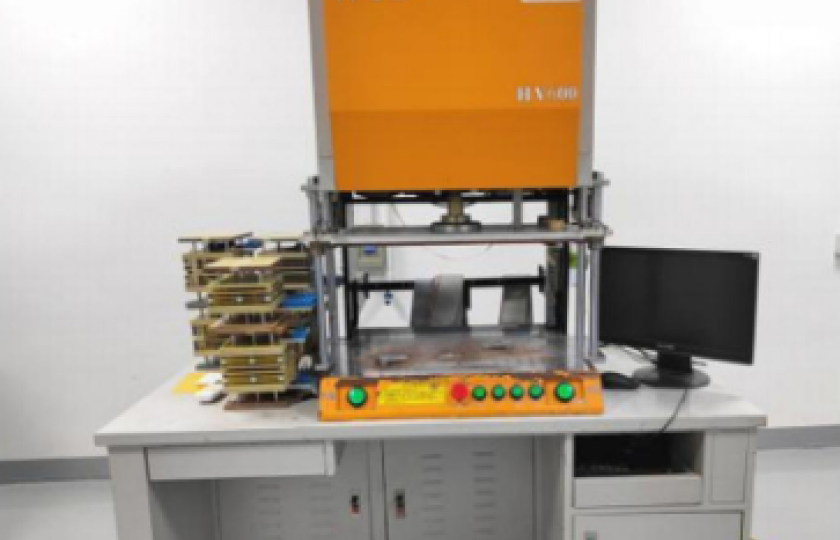
Reliability testing
(usually periodic sampling testing)
Thermal stress test: such as 288 ° C tin immersion test, to check the thermal shock resistance of the plate and hole wall, and determine whether there is delamination or blistering.
Impedance testing: Use an impedance analyzer to sample and test to ensure that the impedance value is controlled within the design requirements range (such as 50 Ω± 10%), with reference to customer requirements.
Voltage endurance test: to verify whether the insulation layer can withstand the specified high voltage without being broken down.
Summary: The core objectives of self inspection and testing
The core objective of the PCB's self inspection and testing standard system is to establish a quality control loop for prevention, detection, and correction.
Self inspection: It is a process control that focuses on prevention and immediate correction.
Final inspection: It is result verification to ensure that the products delivered to the customer meet 100% of the specifications.